Heard about this one on NPR. When I grow up, I want to do for physics what these guys are doing for economics:
Monday, January 25, 2010

Sunday, January 24, 2010
Nick Cave, Haiti, and the Age of Weeping
"Father why are all the children weeping?
They are merely crying son.
O, are they merely crying father?
Yes, true weeping is yet to come."
-Nick Cave, The Weeping Song

I wouldn't categorize myself as someone who lacked empathy in my youth, but I wasn't really moved by abstract disasters - I pretty much had to see something for it to affect me.
Then, I had kids. Now, I seem to be extremely sensitive to certain things. I teared up the other day when NPR was playing MKL's "I have a dream" speech. Certain "Law and Order" episodes drive me from the room. And, lately, I can't bear to watch the disaster footage from Haiti.
I first heard "The Weeping Song" while a freshman at Purdue. I was newly turned on to Nick Cave after hearing and seeing him in Wim Wender's "Wings of Desire". I remember thinking what a cool abstraction it was; the difference between crying and weeping.
I don't think I really know the difference yet, having had such a fortunate life, but my imagination can now take me there...
In Series or in Sequence?
In Physics, we talk about having circuit elements in "parallel" (current splits to go through either but not both) or in "series" (same current goes through one element and then the next).

So what is the difference between series and sequence?
In Math it is the difference between an ordered set (sequence) and the sum of that ordered set (series).
For everyday usage, dictionary.com supplies the following:
"Series is applied to a number of things of the same kind, usually related to each other, arranged or happening in order: a series of baseball games. Sequence stresses the continuity in time, thought, cause and effect, etc.: The scenes came in a definite sequence."
The Latin roots of the words are "connection" (series) and "to follow" (sequence).
It seems to me that the best alternate to "parallel" (from the greek "side by side") in the physics sense is actually "sequence" not "series". In both series and parallel circuits, the resistors are similar and arranged relative to each other as well as being connected so there is almost not enough distinction between "parallel" and "series"!
So why do we say "series circuit" instead of "sequence circuit"? It turns out that the total resistance of a bunch of resistors in series is the sum of all the individual resistors - so it looks like a mathematical series (being added).
I wish the parallel circuits had a formula for total resistance that reminded one of geometric parallel-ness, but (as far as I know) they do not. So there is no good parallel for a parallel circuit, be it series or sequence...
Melville on my Mind
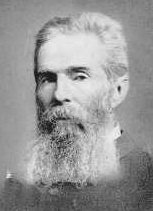
First off, both my brother and I have attempted the reading at various points only to inevitably fizzle out. It calls us back for we both know the book as "the only work of fiction that Dad has read twice".
Then, last December, in one of many "my favorites" lists, a contemporary writer listed Moby Dick as one of his favorites but with the caveat "no one under 40 should really read it since they wouldn't get it".
A few weeks back there was a brief blurb I read somewhere about an artist who was drawing his way through Moby Dick, a page at a time. I haven't checked out the blog of his work, but I am thinking of checking on it as I read the book.

Call me Foolish, but I think the Universe has launched me on a quest. Certain enlightenment awaits, no?
Or, maybe, it is all about the journey and not so much the result.
Monday, January 18, 2010
War & Peace & Obama & MLK, Jr.
Finally got around to reading Obama's much lauded Nobel Peace Prize acceptance speech. One should read the whole thing however you feel about Obama - it is a rich and stimulating speech. However, on this day, I would draw your attention to this particular portion:

"...But we do not have to think that human nature is perfect for us to still believe that the human condition can be perfected. We do not have to live in an idealized world to still reach for those ideals that will make it a better place. The non-violence practiced by men like Gandhi and King may not have been practical or possible in every circumstance, but the love that they preached - their faith in human progress - must always be the North Star that guides us on our journey.
For if we lose that faith - if we dismiss it as silly or naïve; if we divorce it from the decisions that we make on issues of war and peace - then we lose what is best about humanity. We lose our sense of possibility. We lose our moral compass.
 Like generations have before us, we must reject that future. As Dr. King said at this occasion so many years ago, "I refuse to accept despair as the final response to the ambiguities of history. I refuse to accept the idea that the 'isness' of man's present nature makes him morally incapable of reaching up for the eternal 'oughtness' that forever confronts him."
Amen

For if we lose that faith - if we dismiss it as silly or naïve; if we divorce it from the decisions that we make on issues of war and peace - then we lose what is best about humanity. We lose our sense of possibility. We lose our moral compass.
 Like generations have before us, we must reject that future. As Dr. King said at this occasion so many years ago, "I refuse to accept despair as the final response to the ambiguities of history. I refuse to accept the idea that the 'isness' of man's present nature makes him morally incapable of reaching up for the eternal 'oughtness' that forever confronts him."
"
Amen
Sunday, January 17, 2010
Starlight, Sunsets, Equations, and T.S. Eliot
I sometimes tell my students a tale of how Irene had a math professor at M.I.T. who wrote an equation on the board, looked at it, and told the class "This equation is why I believe in God." The equation is
eiπ = -1
e: the natural logarithm - the perfectly increasing curve
i: the imaginary number - the square root of -1
pi: the cyclical number - the ratio of any circle to its diameter
Why should these three irrational & imaginary numbers combine in any meaningful way - much less in such a simple, elegant way? The universe must be carefully crafted indeed goes the argument.

- Richard Feynman
Several years ago, an erstwhile student of mine (MF) came back from college newly empowered by higher level math courses and proudly proclaimed to me: "Hey - all that e to i pi stuff you used to talk about? That's just Euler's equation."

Technically, he was right, but I knew he was missing something, though I wasn't sure what exactly. Now I realize that our appreciation of profound truths is cyclical and he was simply at stage two:
At first we are awed by its mere existence;
Then we dissect its truths into constituent parts and feel we understand it;
Only then can we come back around and be awed once again in an even more profound way
"We shall not cease from exploration
And the end of all our exploroing
Will be to arrive where we started
And know the place for the first time."
- T. S. Eliot

Thursday, January 14, 2010
Educational Mercenaries and Socrates
"If we're seniors, why should we learn anything if we're not taking the final exam?" asks JB in class today. All teachers get this question (or versions of it: "Will this be on the test?"; "Should I write this down?"; "Why do we need to know this?"; "When will I ever use this?"). Since seniors leave early, we don't give them a final in science.
Feeling feisty today, I launch right into my "You're just an educational mercenary" speech.


Learning is not the goal of an educational mercenary - their theory of education is "High school grades get me into college" then "college gets me a good job" then "A good job earns me good money" and finally "Money lets me buy things and services that can make me happy". Just in it for the money. A mercenary.
I went into my "true searching for understanding leads to a richer, more satisfying life - the other path just has you going through the motions and trappings of life". As a friend put it recently: occasionally, rats trapped in a maze may find a piece of cheese and experience happiness, but it's so much better to simply get out of the maze!
I had a good rhythm going and felt pretty full of myself (imagine that!) and some of the other students were nodding and enjoying my tirade. Then, when I was done, JB and his friends looked up and said "Wait - you didn't answer his question - why do we have to learn it if there's no final exam for us?"
I was so happy with myself at this point, I didn't even get depressed.
Feeling feisty today, I launch right into my "You're just an educational mercenary" speech.


I went into my "true searching for understanding leads to a richer, more satisfying life - the other path just has you going through the motions and trappings of life". As a friend put it recently: occasionally, rats trapped in a maze may find a piece of cheese and experience happiness, but it's so much better to simply get out of the maze!
I had a good rhythm going and felt pretty full of myself (imagine that!) and some of the other students were nodding and enjoying my tirade. Then, when I was done, JB and his friends looked up and said "Wait - you didn't answer his question - why do we have to learn it if there's no final exam for us?"
I was so happy with myself at this point, I didn't even get depressed.
"The Unexamined Life is not worth living" - Socrates
(pics from clog.dailycal.org (graduation)and www.poligazette.com (mercenaries))
Subscribe to:
Posts (Atom)


